
Invasive Plants: What's the big
deal? Learn how
to identify both native and nonnative invasive plants; discover the impacts on
the environment, wildlife habitat, and your checkbook; learn why prevention,
early detection, and rapid response are vital in the control of invasive plants;
gain a better understanding of the various methods used to control them
effectively; and learn about financial and technical resources that can be a
help. Workshop is free.
Purdue's website has many interesting workshops to choose from.
Thursday, September 22, 2011
Friday, September 16, 2011
137 Introduced Amphibian and Reptile Species in Florida
The article in ScienceDaily, says Florida has the world's worst invasive amphibian and reptile problem, and a new 20-year study led by a University of Florida researcher verifies the pet trade as the No. 1 cause of the species' introductions. Zootaxa has a preview of the original article.

Monday, September 12, 2011
Webinar-Invasive Plants in Southern Forests
Webinar - A Management Guide for Invasive Plants in Southern Forests is scheduled for Sep 20, 2011 12:00 - 1:00pm US/Eastern. Click here for more information.
Nonnative plants continue to invade and spread through forests in the South. These infestations increasingly erode forest productivity, hinder forest use and management activities, and degrade diversity, habitat, and our recreational experiences. Managers, landowners, and homeowners need to have the latest information on how to prevent entry to their lands, build strategies with neighbors, implement integrated procedures for control, and proceed toward site rehabilitation.
We will introduce you to a new book that we co-authored, which is available free from the Southern Research Station, entitled “A Management Guide for Invasive Plants in Southern Forests” (General Technical Report SRS-131). We will provide an overview of how these actions fit together and the latest control methods. The guide provides detailed control prescriptions for 56 prevalent invasive plants and groups for your reference.
We will introduce you to a new book that we co-authored, which is available free from the Southern Research Station, entitled “A Management Guide for Invasive Plants in Southern Forests” (General Technical Report SRS-131). We will provide an overview of how these actions fit together and the latest control methods. The guide provides detailed control prescriptions for 56 prevalent invasive plants and groups for your reference.
Author(s)/Presenter(s):
- Jim Miller - USDA Forest Service, Southern Research Station, Auburn University, AL
- Stephen Enloe - Department of Agronomy and Alabama Cooperative Extension System, Auburn University, AL
Credits:
- Texas Dept of Ag - Pesticide Safety Continuing Ed - 1 hour IPM Credit
Free copies of "A Management Guide for Invasive Plants in Southern Forests" (General Technical Report SRS-131) can be requested at pubrequest@fs.fed.us or by calling 828-257-4830.
Invasive Forest Insects Cost Homeowners Billions
The study finds that homeowners and tax payers are bearing the cost of the damage to forests in America caused by invasive non-native insects. This costs runs into the billions of dollars.
Read the article in PLoS ONE, Economic Impacts of Non-Native Forest Insects in the Continental United States (Aukema JE, Leung B, Kovacs K, Chivers C, Britton KO, et al. (2011)).
Read ScienceDaily's report on this article.
Read the article in PLoS ONE, Economic Impacts of Non-Native Forest Insects in the Continental United States (Aukema JE, Leung B, Kovacs K, Chivers C, Britton KO, et al. (2011)).
Read ScienceDaily's report on this article.
Thursday, September 8, 2011
Natural Areas Conference - Early Bird Registration Ends Soon!

Early Bird
Registration
Ends Soon!
and save up to $50!
You
are invited to attend the 38th annual Natural Areas Conference hosted by the
Natural Areas Association (NAA) with co-host the National Association of Exotic Pest Plant Councils (NAEPPC).
Florida is home to more than 9
million acres of federal, state and locally conserved natural areas. Tallahassee and the
natural beauty of the Florida panhandle provide a stunning backdrop for the
conference proceedings.
Conference
Quick Links
Wednesday, September 7, 2011
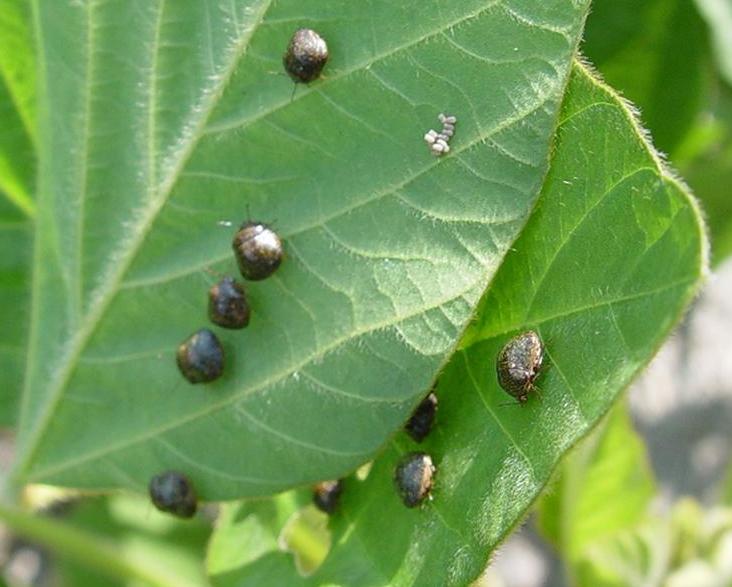
Invasive Species Alert - Kudzu Bug Spreading Across the South
In an article from Georgia FACES, UGA Entomologist Wayne Gardner said, “The bug can now be found in 143 Georgia counties, all South Carolina counties, 42 North Carolina counties and 5 Alabama counties.” Read this article.
 |
| Adult Megacopta cribraria and eggs photo by Phillip Roberts, University of Georgia, Bugwood.org |
 |
| Megacopta cribraria eggs and nymphs photo by Phillip Roberts, University of Georgia, Bugwood.org |
Do you have a CISMA or CWMA?
Is there a Cooperative Invasive Species Management Areas (CISMAs), Cooperative Weed Management Areas (CWMAs) or Partnerships for Regional Invasive Species Management (PRISMs) in your area? Check to see if you are on the map. If not then submit your CISMA/CWMA.
A CISMA/CWMA is a partnership of federal, state, and local government agencies, tribes, individuals, and various interested groups that work together cooperatively to manage invasive species (or weeds) in a defined area.
There is information available on how to create a CISMA/CWMA in your area. There are also instructions and a template for creating a website for your CISMA/CWMA.
Subscribe to:
Posts (Atom)