Thursday, September 8, 2011

Natural Areas Conference - Early Bird Registration Ends Soon!

Natural Areas Conference 2011 theme

Early Bird Registration
Ends Soon!  

   Register Now
and save up to $50!

You are invited to attend the 38th annual Natural Areas Conference hosted by the

Florida is home to more than 9 million acres of federal, state and locally conserved natural areas.  Tallahassee and the natural beauty of the Florida panhandle provide a stunning backdrop for the conference proceedings.
Conference Quick Links
  Hotel

Wednesday, September 7, 2011

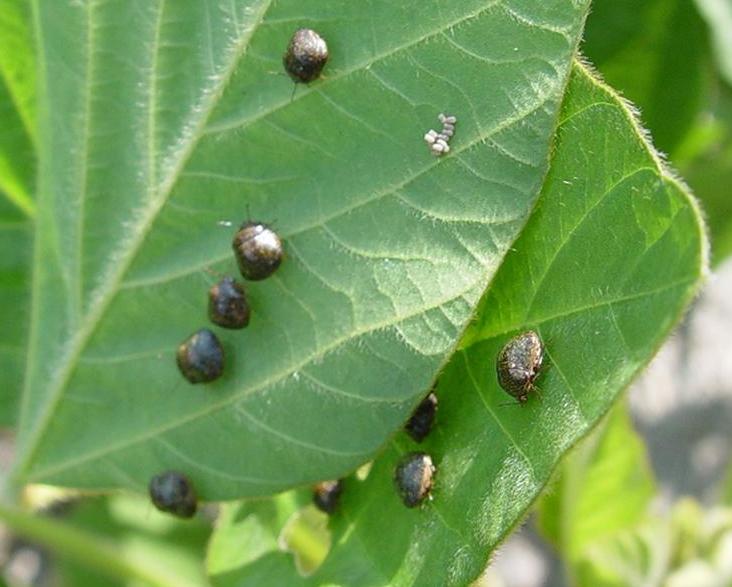
Invasive Species Alert - Kudzu Bug Spreading Across the South

In an article from Georgia FACES, UGA Entomologist Wayne Gardner said, “The bug can now be found in 143 Georgia counties, all South Carolina counties, 42 North Carolina counties and 5 Alabama counties.” Read this article.
Adult Megacopta cribraria and eggs
photo by Phillip Roberts, University of Georgia, Bugwood.org
Megacopta cribraria eggs and nymphs
photo by Phillip Roberts, University of Georgia, Bugwood.org

Do you have a CISMA or CWMA?


Is there a Cooperative Invasive Species Management Areas (CISMAs), Cooperative Weed Management Areas (CWMAs) or Partnerships for Regional Invasive Species Management (PRISMs) in your area? Check to see if you are on the map. If not then submit your CISMA/CWMA.
A  CISMA/CWMA is a partnership of federal, state, and local government agencies, tribes, individuals, and various interested groups that work together cooperatively to manage invasive species (or weeds) in a defined area.

There is information available on how to create a CISMA/CWMA in your area. There are also instructions and a template for creating a website for your CISMA/CWMA.


Tuesday, September 6, 2011

Exotic Earthworm Invasion

Forests Under Threat from Exotic Earthworm Invasion: Study Shows Humans to Blame for Spread of Non-Native Species an article in Science Daily reports on information reported in an article from Human Ecology. Both articles are very interesting and worth reading. Unfortunately it really does not come as a surprise that humans are the culprits in the importation and spread of non-native, invasive or potentially invasive species. We are continually looking for a better, easier way to do things. This is one of those human qualities which has a good side and a bad side. We have learned that we need to be much more cautious when introducing something non-native to the ecosystems we live in and are a part of. These non-native species are living organisms that do not recognize our man made boundaries. They don't stop at the fence in our backyard or at county, state or national boundaries. Each and every one of us can help to stop the introduction and spread of invasive species by starting with informed, responsible stewardship of our own little piece of America, however large or small that may be. Fruit from an invasive plant grown in a container on an apartment balcony can be spread for many miles by wildlife eating that fruit. Most states have an Exotic or Invasive Species Council. Join your local council and ask for ways you can help and for a list of non-invasive alternatives for landscaping. For Georgia go to GA-EPPC.org

Forest floor before non-native earthworm invasion is rich in organic material
photo by Robert Lee, Bugwood.org

Forest floor after non-native earthworm invasion. Orgainc material is gone.
Photo by Robert Lee, Bugwood.org

Thursday, September 1, 2011

Call for Data - National Data Collection Project

Through funding from U. S. Forest Service - Forest Health Protection, we are now expanding the call for invasive plant distribution data nationwide! This will allow EDDMapS to display the true range of known invasive plants as well as add new species to the distribution maps as they are reported. Plants such as jointed goatgrass (Aegilops cylindrica), garlic mustard (Alliaria petiolata), and multiflora rose (Rosa multiflora) have noticeably patch distribution maps; we hope to be able to connect "isolated" populations to the existing known range. To handle the anticipated influx of data, we hired Rebekah Wallace, MS Weed Science - University of Georgia, as EDDMapS Data Coordinator to streamline the recruiting, formatting, and uploading bulk data into EDDmapS. Please contact Rebekah at bekahwal@uga.edu or 229-386-3298 and help us to complete the picture of invasive plant distribution nationwide.

Certificate in Coastal Native Plants Program

Conserving native plants is an important part of protecting habitats from invasive plants. This program will help you learn more about the wonderful native habitats here in Georgia.

The Certificate in Coastal Native Plants Program
by
The State Botanical Garden of Georgia and Coastal Wildscapes
For more information about the Certificate program or to register for classes, pease contact Cora Keber at 706-542-6156 or ckeber@uga.edu.
Or you may register online at http://www.uga.edu/botgarden/eduregister.html

Rhexia alifanus
photo by Karan Rawlins, University of Georgia, Bugwood.org
 ORIENTATION SESSION (Optional and Free) 
 
Orientation for New or Interested Students to the Certificate in Native Plants Program. Friday, September 16, 2011. 9:00am – 10:00am. Bamboo Farm and Coastal Gardens, Savannah. 
CORE COURSES (All four are required of Certificate students)
Plant Taxonomy. Saturday, November 5, 2011. 10:00am – 5:00pm. Bamboo Farm and Coastal Gardens, Savannah. Members $95*, non-members $105.     
Basic Botany. Saturday, January 28, 2012. 10:00am – 5:00pm. Bamboo Farm and Coastal Gardens, Savannah. Members $95*, non-members $105.  
Natural Communities of Georgia. Saturday, March 3, 2012. 9:00am – 5:00pm. Ogeechee Canal, Savannah. Members $95*, non-members $105.
Plant Conservation: Protecting Plant Diversity in the Garden and in the Wild. Saturday, June 2, 2012.10:00am – 5:00pm. Bamboo Farm and Coastal Gardens, Savannah. Members $95*; non-members $105
ELECTIVE COURSES (Certificate students choose six or more and there are many to choose from)
And then 16 SERVICE HOURS Completes your requirements.
*Class fees are reduced for members of the following organizations. To receive discount, class fees must be paid by check only.

Thursday, August 18, 2011

EDRR Alert - Ravennagrass

Ravennagrass (Ripidium ravennae (L.) Trinius) was noticed by several sharp observers in the mid-Atlantic region who reported it in 2009, in time for it to be included in the 4th edition of the Plant Invaders book as one of the "Plants to Watch" (p. 130). If you spot this non-native plant outside of landscaped areas, please report your observation to MAEDN.
Ravennagrass, Ripidium ravennae
photo by  The Nature Conservancy Archive, Bugwood.org
The Mid-Atlantic Early Detection Network or MAEDN is powered by EDDMapS.
Other images for Ravennagrass can be found at Invasive.org.